Deep Cuts深度樂評
Krakatau Terra-Ignota Krakatau Terra-Ignota
Krakatau — Terra-Ignota
May 27, 2026
There is an old convention in cartography. When mapmakers came to a region they had not surveyed, they wrote the Latin words terra incognita, or sometimes terra ignota — unknown land. After the satellite era, those blanks went away. Now eve 製圖學裡有一條老規矩:地圖上未測繪過的地方,製圖師會寫一個拉丁詞——Terra Ignota,未知之地。衛星時代之後,這些留白都被填滿了。連你家後院都被 Street View 的車刮過一次。所以墨爾本一支器樂三人組,花了十二年做相反方向的事——把已經被填滿的那一塊擦掉——就顯得格外有意思。
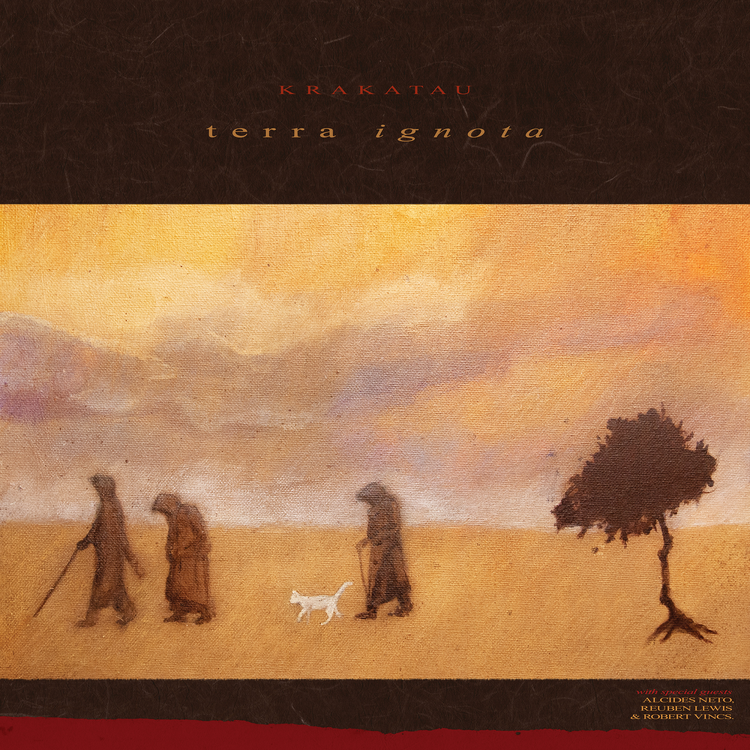
There is an old convention in cartography. When mapmakers came to a region they had not surveyed, they wrote the Latin words terra incognita, or sometimes terra ignota — unknown land. After the satellite era, those blanks went away. Now even your back porch has been scraped by a Street View car. So it is a little funny that an instrumental trio from Melbourne has spent twelve years doing the opposite of a satellite: erasing the bits of the map that had been filled in.
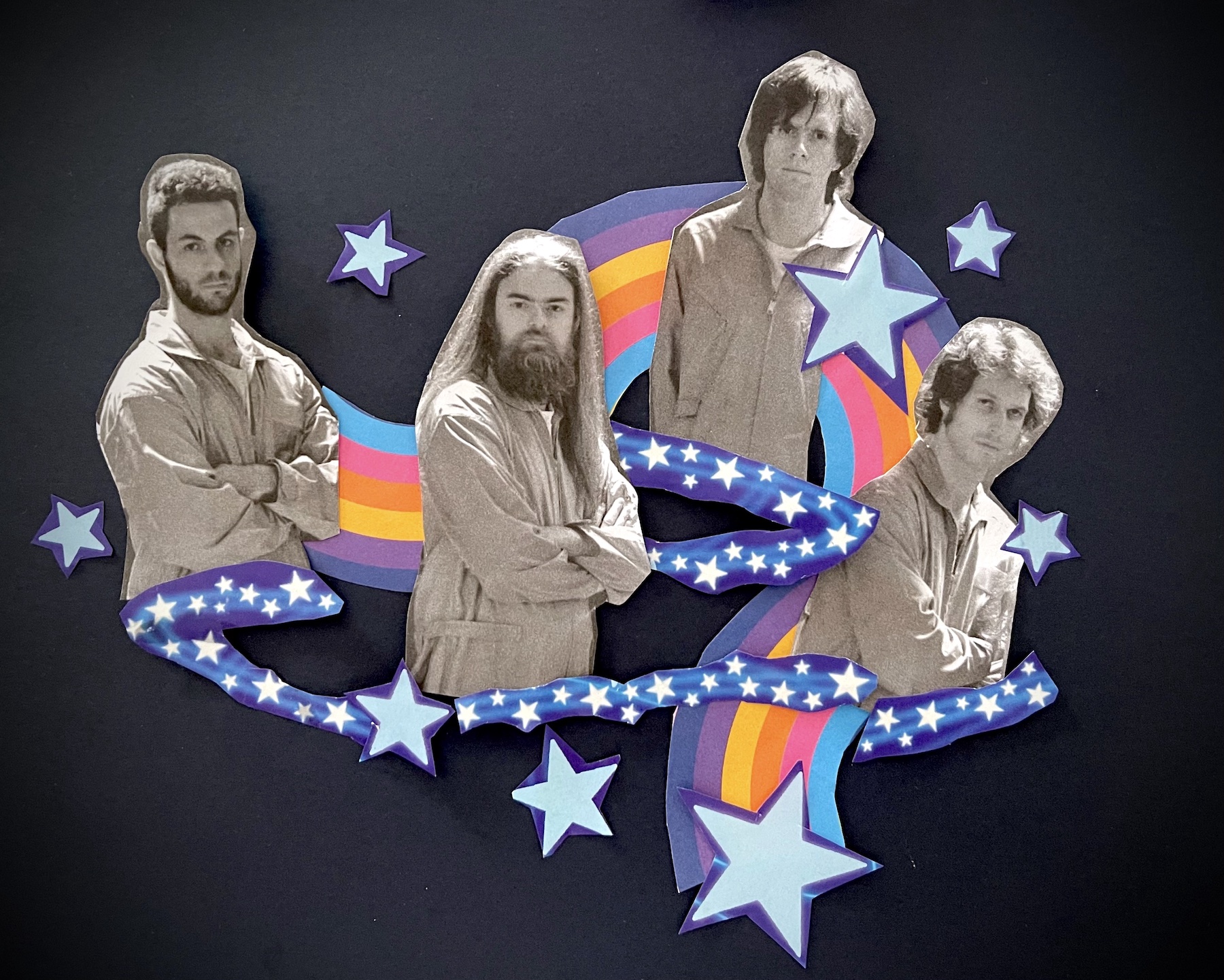
Krakatau is the trio. Terra Ignota, released on the local label Elations Recordings on 15 May 2026, is their first full-length record since the 2014 debut Water Near a Bridge on Trouble in Mind, with only a 12" — 2016's Tharsis Montes/Apogean Tide — in between. James Tom plays piano, electric piano, synthesizers, and programs; Danny Smith handles fretless and double bass; Dylan Lieberman drums. There is, deliberately, no guitar. The most decorative thing a jazz fusion record usually offers — the long, burning solo — is the first thing this band took off the table. What remains has to stand on its own bones.
It stands. What is worth dwelling on is the lineage those bones connect to.
The line the canon skipped
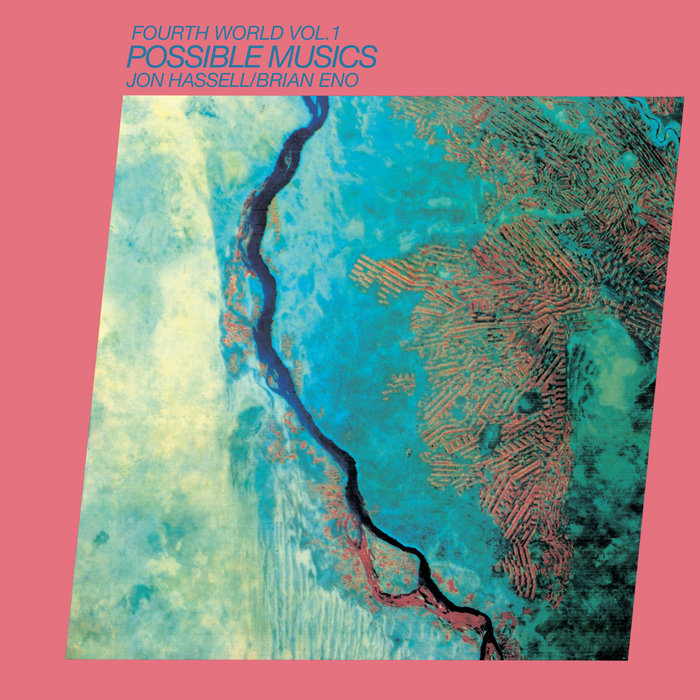
The first two minutes of the title track are immediately recognisable to anyone who has lived with Jon Hassell's Fourth World, Vol. 1: Possible Musics, the 1980 record he made with Brian Eno. There is the same humid digital-minimalism, the same sense of distance, and somewhere in the haze, Reuben Lewis's trumpet emerges as if it had been pulled, slowly, through gauze. Hassell coined "Fourth World" to describe what he called "a unified primitive/futuristic sound combining features of world ethnic styles with advanced electronic techniques." That definition has been digested by academia; mainstream jazz history mostly walked around it. Hassell was too strange.
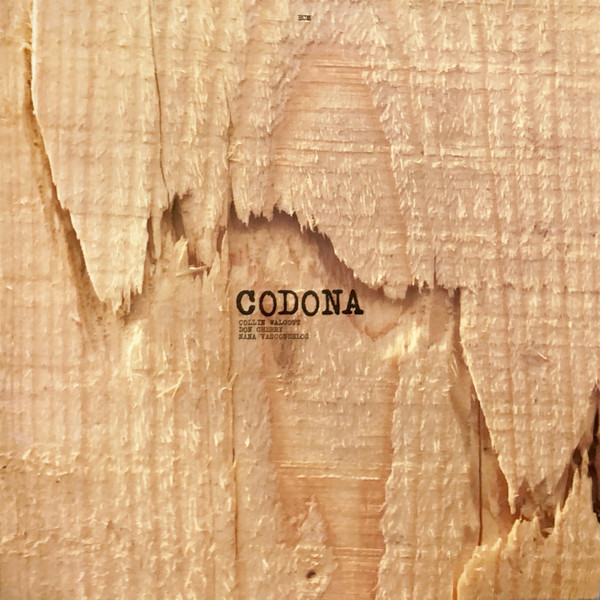
Codona — Don Cherry, Collin Walcott, Naná Vasconcelos, three records on ECM between 1979 and 1983 — was too marginal. Eberhard Weber's chamber-jazz minimalism was too quiet. Terra Ignota, almost archaeologically, picks up the thread. And it picks it up in a specifically Melbourne way.
Inviting the lineage into the room
The guest saxophonist is not casually chosen. Rob Vincs is the former Head of Jazz and Improvisation at the Victorian College of the Arts, the program that Brian Brown — the patriarch of Australian hard bop — founded in 1980 and ran for eighteen years. Most of Melbourne's improvising-jazz lineage in the past four decades flows through that course. Vincs's own research sits at the intersection of ECM, electro-acoustic improvisation, and world musics. To put him on this record is not a cameo; it is the band inviting its own lineage into the studio.
Alcides Neto, Melbourne-based and Brazilian by birth, adds layered percussion and wordless vocals to "Birds of Passage." That is the difference between borrowing a Latin idiom and asking an actual diasporic musician to play it. The distinction matters more than it gets credit for. Reuben Lewis, whose work The Wire has described as "a vivid listening experience that gleams with sinister detail," is the next generation of the Naarm improvising scene. The record's guest list is, quietly, a map of how Australian jazz has actually been transmitted.
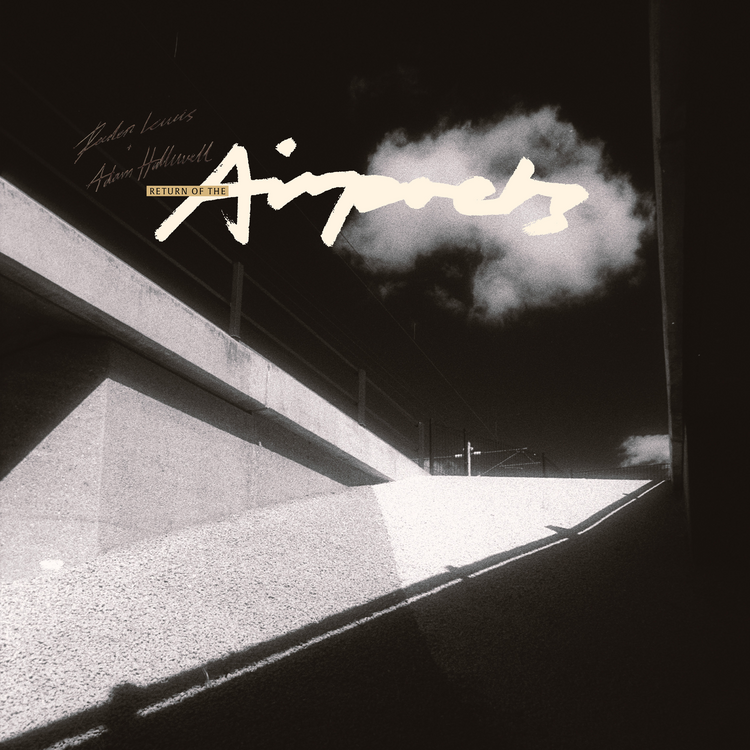
The lineage extends past this one record. The Elations roster — Adam Halliwell's Freedom Lapse (2023), Halliwell and Lewis's Return of the Airpoets (2025), the Zeca Assumpção / Lelo Nazario duo recordings drawn from Hermeto Pascoal's mid-1970s Grupo Vice Versa — reads like a curated thesis on the underground world-jazz lineage Krakatau are operating inside. The label is the bigger map. Terra Ignota is the loudest pin on it.
Seventeen minutes that do not feel like seventeen minutes
The most ambitious thing on the album is "Cosmetic Surgery," a three-part, seventeen-minute piece — and the parts are named with a kind of deadpan philosophical wit. I. Prima Materia is the alchemists' base substance before transmutation; II. Passage à l'Acte is Lacan's term for the moment desire crosses into irrevocable action; III. Mea Culpa is the Catholic confession of fault. Alchemy, psychoanalysis, contrition, in that order. The music does the work the titles describe. It opens in post-minimalist territory, repeated piano figures looser than Steve Reich but cut from the same cloth. It grows a Latin pulse. By the middle it is fully fusion. By the end it has cooled into contemporary jazz — and the chastened, ECM-quiet last movement is the apology. The track is the album in miniature, and Krakatau's long-form writing is the reason it does not feel like a tour of styles. They have learned how to make seventeen minutes pass without anyone checking the clock.
The closer, "Trial in Absentia," is an acoustic quartet piece that points unambiguously at late-1970s ECM — Weber-cold, chamber-music inward. In the Gimmie Zine interview Tom gave in March 2026, he mentioned that Krakatau's live sets sometimes include "Madagascar," a piece Richie Beirach wrote for the John Abercrombie Quartet's 1980 ECM record. Beirach died on 26 January 2026, less than two months before Tom said this. No one in the credits calls "Trial in Absentia" a tribute. It doesn't have to.
The middle track, "In Memory (Folie Adieu)," is a saxophone-and-synth duet whose title nests a pun that takes a second to feel: not the more familiar folie à deux, but the shared delusion saying goodbye. It is the album's most melancholic stretch, and the most clearly indebted to the quieter Hassell–Eno collaborations.
The map and the feed
What ties all of this together is something Tom said in the same interview, which I think is the key. "The main thing I have been thinking about the past few years," he told the interviewer, "is the fractured experience of being connected to a mass of decentralised information and how I do not think humans are meant to be connected in this way at all times." Hold that against the record. Terra Ignota is not a retro exercise. It is an anti-overload record — about refusing to finish the map, about preserving the capacity to not know.
The cartographer's blank used to be an admission of ignorance. In an era when everything has been indexed and pushed and refreshed, the blank has become a kind of ethics. Krakatau do not say any of this out loud. They have simply made a record that sounds, audibly, like it has space left in it — and the space is not laziness or mysticism but a properly inherited, properly taught instrumental grammar that runs back through Vincs and his teachers, through ECM, through Hassell.
It is not a masterpiece. It is one of the most quietly replayable jazz records I have heard in 2026, and it has no interest in explaining itself, which is the best part.
https://krakatauband.bandcamp.com/album/terra-ignota
Krakatau — Terra Ignota. Elations Recordings, 15 May 2026. Five tracks. Featured on Triple R's Album of the Week, 25 May 2026.
製圖學裡有一條老規矩:地圖上未測繪過的地方,製圖師會寫一個拉丁詞——Terra Ignota,未知之地。衛星時代之後,這些留白都被填滿了。連你家後院都被 Street View 的車刮過一次。所以墨爾本一支器樂三人組,花了十二年做相反方向的事——把已經被填滿的那一塊擦掉——就顯得格外有意思。
樂團叫 Krakatau。新專輯《Terra Ignota》於 2026 年 5 月 15 日由本地廠牌 Elations Recordings 發行。距離他們 2014 年首張長碟《Water Near a Bridge》(芝加哥 Trouble in Mind 發行)已經隔了十二年,中間只有 2016 年那張 12" EP《Tharsis Montes/Apogean Tide》。James Tom 負責鋼琴、電鋼琴、合成器與編程,Danny Smith 操刀無格指板貝斯與低音提琴,Dylan Lieberman 打鼓——三人組裡沒有吉他。爵士融合最容易拿來裝飾的那一層、燃燒的吉他獨奏,他們從一開始就拒絕。剩下的骨架必須自己撐住。
撐住了。但更值得說的,是這副骨架接的是哪一條譜系。
主流爵士史跳過的那條線
聽同名曲的前兩分鐘,立刻就會認出來:這是 Jon Hassell 在 1980 年與 Brian Eno 合作的那張《Fourth World, Vol. 1: Possible Musics》開出來的路。digi-minimalism、第四世界那種潮濕的大氣,遠處有 Reuben Lewis 的小號像是被紗布慢慢拉過一層。Hassell 當年發明「第四世界」這個詞,是為了形容「結合世界民族風格特徵與先進電子技術、原始與未來統一的聲音」。半個世紀過去,學院派吸收了這個概念,主流爵士史卻幾乎跳過了它——Hassell 太怪。
Codona(Don Cherry、Collin Walcott、Naná Vasconcelos 在 ECM 1979 到 1983 年間的三張)太邊緣,Eberhard Weber 的歐式室內爵士太安靜。Krakatau 像考古隊員一樣把這條被埋掉的線挖了回來。而且挖得相當墨爾本。
把譜系本人請進錄音間
客座薩克斯風的 Rob Vincs 不是隨便挑的。他是維多利亞藝術學院(VCA)爵士與即興系前主任,繼承的是澳洲 hard bop 祖師 Brian Brown 1980 年創立、整整主持十八年的教研體系。墨爾本獨立爵士場景過去四十年的師承,基本上都在這條線上。Vincs 自己的研究跨 ECM、電聲即興與世界音樂。他出現在《Terra Ignota》裡不是 cameo——是樂團把譜系本人請進了錄音間。
巴西籍但長居墨爾本的 Alcides Neto 為〈Birds of Passage〉墊上多層打擊樂與無詞人聲。這是借用拉丁節奏與邀請真正的離散音樂人去演奏之間的分別。Reuben Lewis 的小號代表的是墨爾本即興場景的下一代。整張碟的客座名單,悄悄畫出了一張澳洲爵士譜系的傳承圖。
譜系不只落在這一張碟上。Elations 廠牌近年的出品名單——Adam Halliwell 的《Freedom Lapse》(2023)、Halliwell 和 Lewis 的《Return of the Airpoets》(2025)、從 Hermeto Pascoal 1970 年代中期 Grupo Vice Versa 延伸出來的 Zeca Assumpção / Lelo Nazario 二重奏——讀起來像一份對地下 world jazz 譜系的策展論文。廠牌本身就是更大的那張地圖。《Terra Ignota》是這張地圖上最醒目的一枚 pin。
十七分鐘聽起來不像十七分鐘
整張碟最有野心的一首是〈Cosmetic Surgery〉。十七分鐘、三段式,三段的標題本身就是一段冷麵的哲學笑話。I. Prima Materia是煉金術裡變化發生之前的原初物質;II. Passage à l'Acte是拉康用來形容慾望跨越界線、進入不可逆行動的那一刻;III. Mea Culpa是天主教告解裡的「我的過錯」。煉金、精神分析、認罪,依此順序。音樂正在做標題所說的事——開頭是後極簡織體,慢慢長出拉丁節奏,到中段變成完全 fusion,最後落回 ECM 式的冷靜。最後那段剋制、安靜的當代爵士,就是那句道歉。這一首是整張碟的縮影。Krakatau 知道怎樣讓十七分鐘聽起來不像十七分鐘。
收尾那首〈Trial in Absentia〉是純聲學四重奏,明顯指向 1970 年代後期 ECM 的審美——Eberhard Weber 那種冷靜、那種室內樂的內向。James Tom 在 2026 年 3 月接受 Gimmie Zine 訪談時提過,樂團現場會翻彈 Richie Beirach 為 John Abercrombie 四重奏寫的〈Madagascar〉,那是 1980 年 ECM 的唱片。Beirach 在訪談前不到兩個月——2026 年 1 月 26 日——剛剛離世。沒有人在 credits 裡寫〈Trial in Absentia〉是紀念。它也不需要寫。
中間那首〈In Memory (Folie Adieu)〉是薩克斯風加合成器的二重奏,憂鬱、極簡,像 Hassell × Brian Eno 那條更安靜的支線。標題裡的 Folie Adieu 不是 folie à deux——是「兩人共有的妄想症告別了」,這個雙關用得相當苦。
地圖與 feed
把這一切串起來的,可能是 Tom 在同一次訪談裡說的那段話:「過去幾年我一直在想,人類連結到一團去中心化的資訊裡、無時無刻保持連線——這不是我們本來應該有的狀態。」把這句話放在背景再聽,《Terra Ignota》就不是復古習作。它是一張反信息過載的唱片——關於選擇不把那張地圖畫完,關於保留你不知道的事情的能力。
製圖學的留白曾經是知識的恥辱。在一切都被測繪、索引、推送的時代,留白反而成了一種倫理姿態。Krakatau 沒有把這些話說出口。他們只是做了一張聽起來確實有留白的唱片——而這種留白不是出於懶惰或神秘主義,而是出於一種有師承、可以追溯到 Vincs、ECM、Hassell 的器樂語法。
不是神專。但這張是 2026 年我聽過最值得反覆放的爵士融合作品之一。它沒有要解釋自己。這正是最好的部分。
https://krakatauband.bandcamp.com/album/terra-ignota
Krakatau —《Terra Ignota》。Elations Recordings,2026 年 5 月 15 日發行。五軌。獲 Triple R 選為 2026 年 5 月 25 日當週專輯。
Comments 留言