Deep Cuts深度樂評
What a Pedal Steel Guitar Is Doing on a Jazz Record 岡田拓郎《Konoma》:一個吉他手的民藝實驗
岡田拓郎 — Konoma · 2025
November 21, 2025
Jazz | Temporal Drift / ISC Hi-Fi Selects | LP / Digital Jazz | Temporal Drift / ISC Hi-Fi Selects | LP / Digital

Jazz | Temporal Drift / ISC Hi-Fi Selects | LP / Digital
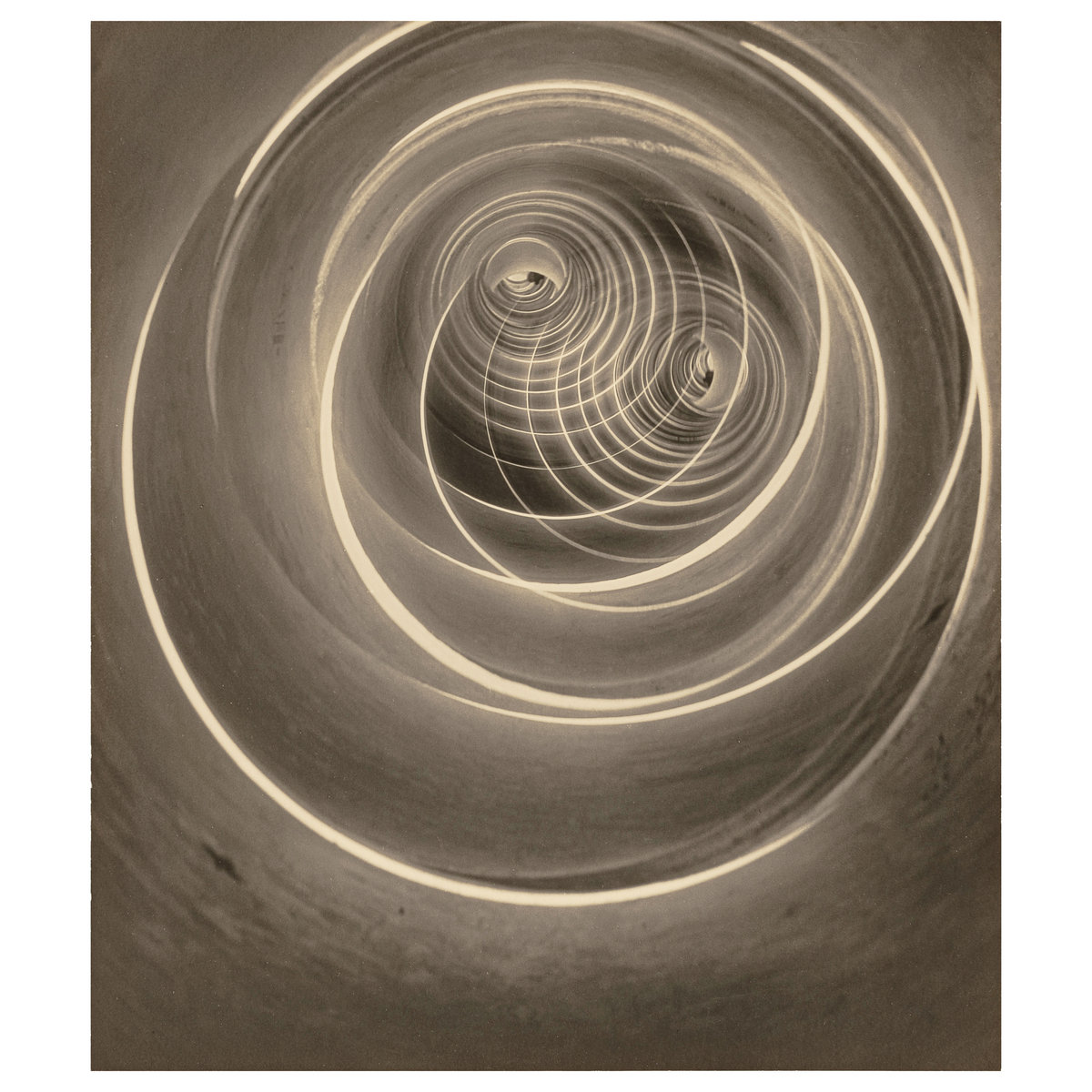
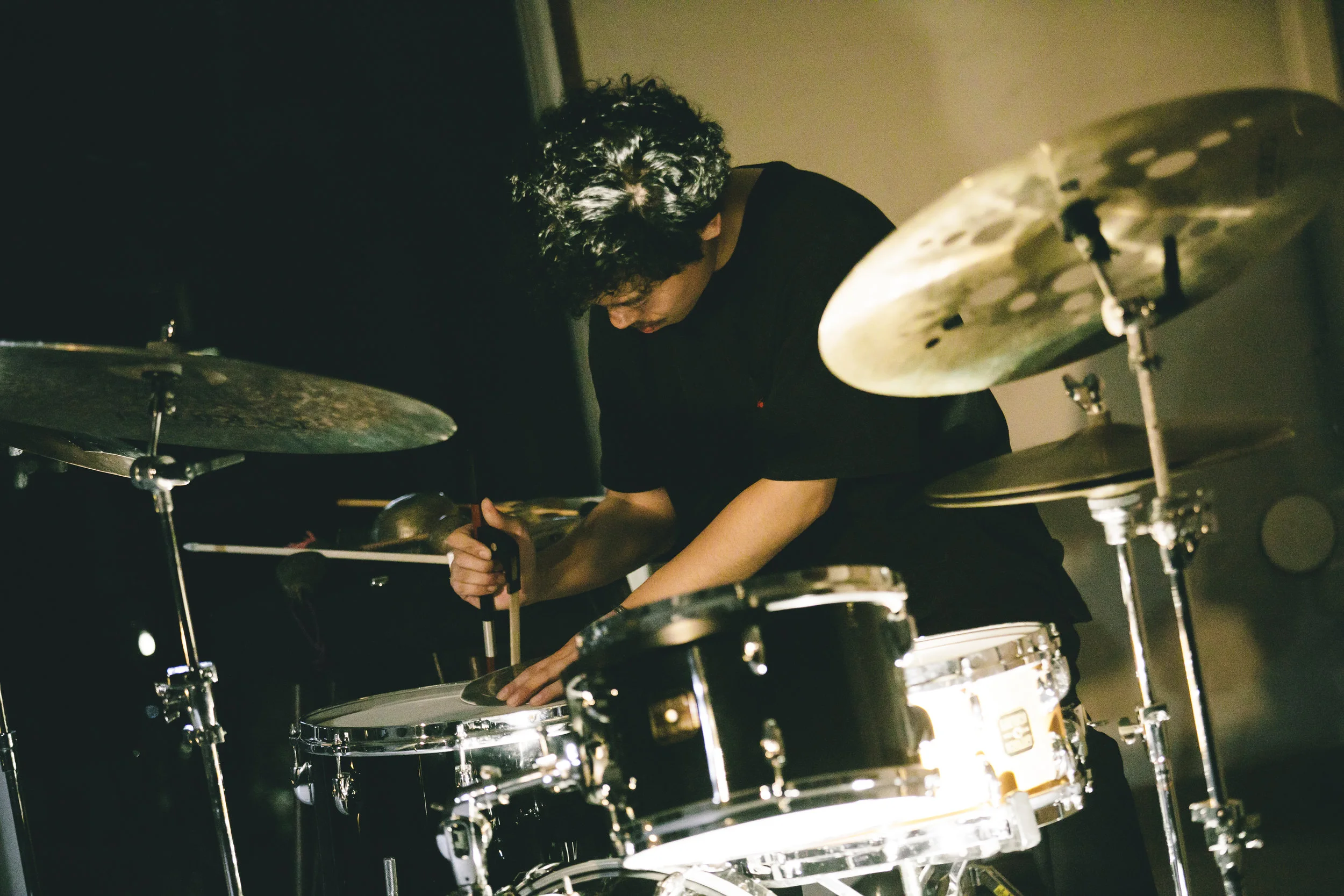
Somewhere around the middle of Takuro Okada (岡田拓郎)'s new album, a pedal steel guitar appears. If you've heard pedal steel before, it was probably on a country record, or in a Hawaiian lounge act, or possibly in one of those ambient-adjacent projects where the instrument gets treated as a texture generator. You almost certainly did not hear it on a jazz album by a Tokyo guitarist who has spent the last several years thinking about the relationship between Black American music and Japanese folk craft. And yet there it is on "Portrait of Yanagi"—Okada playing the thing himself, its gliding tones drifting over Shoei Ikeda (池田抄英)'s tenor saxophone and Yuma Koda (香田悠真)'s Wurlitzer, while Shun Ishiwaka (石若駿)'s drums and Kazuhiko Masumura (増村和彦)'s percussion stay deliberately low in the mix5, as if they'd agreed beforehand to let the room do most of the talking.
The track is named for Yanagi Soetsu, the philosopher who founded the mingei movement in 1926—the idea that anonymous craftspeople making everyday objects (tea bowls, dyed cloth, wooden utensils) were producing a kind of beauty that the fine art establishment had trained everyone to overlook. That Okada chose to honor him not with a standard jazz composition but with a half-remembered melody played on an instrument from another tradition entirely tells you most of what you need to know about Konoma.

The album's conceptual framework comes from a term Okada borrowed from the Chicago-based artist Theaster Gates: "Afro Mingei"1. In 2024, Gates mounted an exhibition at Tokyo's Mori Art Museum (running April through September)7 that placed Black American craft traditions alongside the Japanese mingei movement, arguing that both represented marginalized communities asserting aesthetic dignity through everyday making. The show included ceramics fired in Tokoname, sculptural installations inspired by Chicago funk lounges, a church organ sound piece, and ritual objects rooted in incense, sake, and tea ceremonies. "Black is Beautiful" pushing back against racism; mingei pushing back against industrial erasure of handmade beauty—Gates saw the same impulse at work in both.
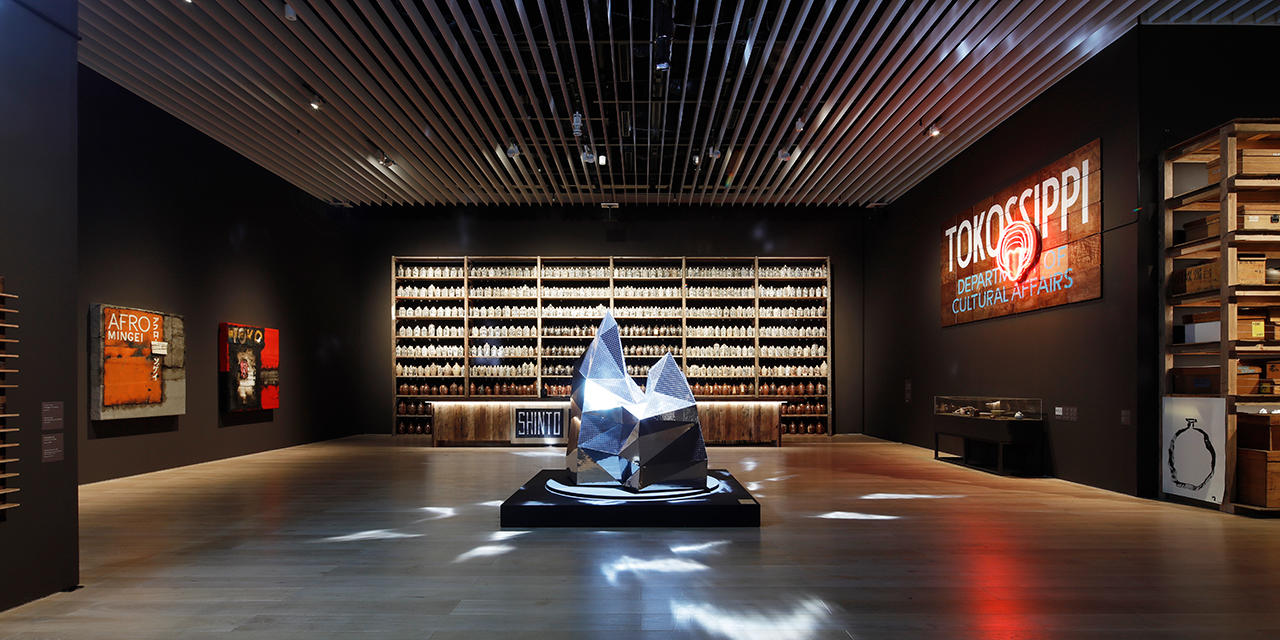
Okada has cited the exhibition in multiple interviews as a turning point236. From Gates he derived the premise of Konoma: that Black music—from blues to free jazz—functions as a kind of folk craft, operating outside institutional frameworks but carrying its own complete aesthetic system. The question the album asks isn't whether a Japanese musician can play jazz (Tokyo has been the world's second-largest jazz market for decades; the question would be naive). It's whether two marginalized aesthetic traditions, separated by an ocean and considerable history, can find common ground without one absorbing the other.
The two covers establish the terms of engagement.
"Nefertite" was written by Norwegian saxophonist Jan Garbarek and appeared on his 1969 debut Esoteric Circle, recorded for the Flying Dutchman label5 before Garbarek became the defining voice of ECM's Nordic austerity. Okada's version strips the arrangement further: Kei Matsumaru (松丸契) on alto saxophone, Ikeda on Rhodes, Koda on Korg MS-10 synthesizer5—a sparser instrumentation than the original, with more silence between the notes. It's not a warming of Garbarek's coldness; it's a deepening of it. The track works as a statement of method: here is how I listen to European jazz listening to non-European improvisation.
"Love" comes from Hiromasa Suzuki (鈴木宏昌)'s 1976 album Colgen World5. Suzuki, nicknamed "Colgen," was a pianist and arranger central to the Japanese fusion era; the original is a piano trio recording with Motohiko Hino on drums and Kunimitsu Inaba on bass—tight, warm, groove-driven. Okada rebuilds it entirely: Matsumaru switches to flute, Koda moves to Wurlitzer, Masumura adds percussion, Okada handles electric guitar and bass. The keyboard-led architecture becomes a woodwind-led one. The melody and harmonic structure remain intact, but every timbral choice has been rethought. This is what I'd call disciplined reinterpretation: the bones are respected, the flesh is new.
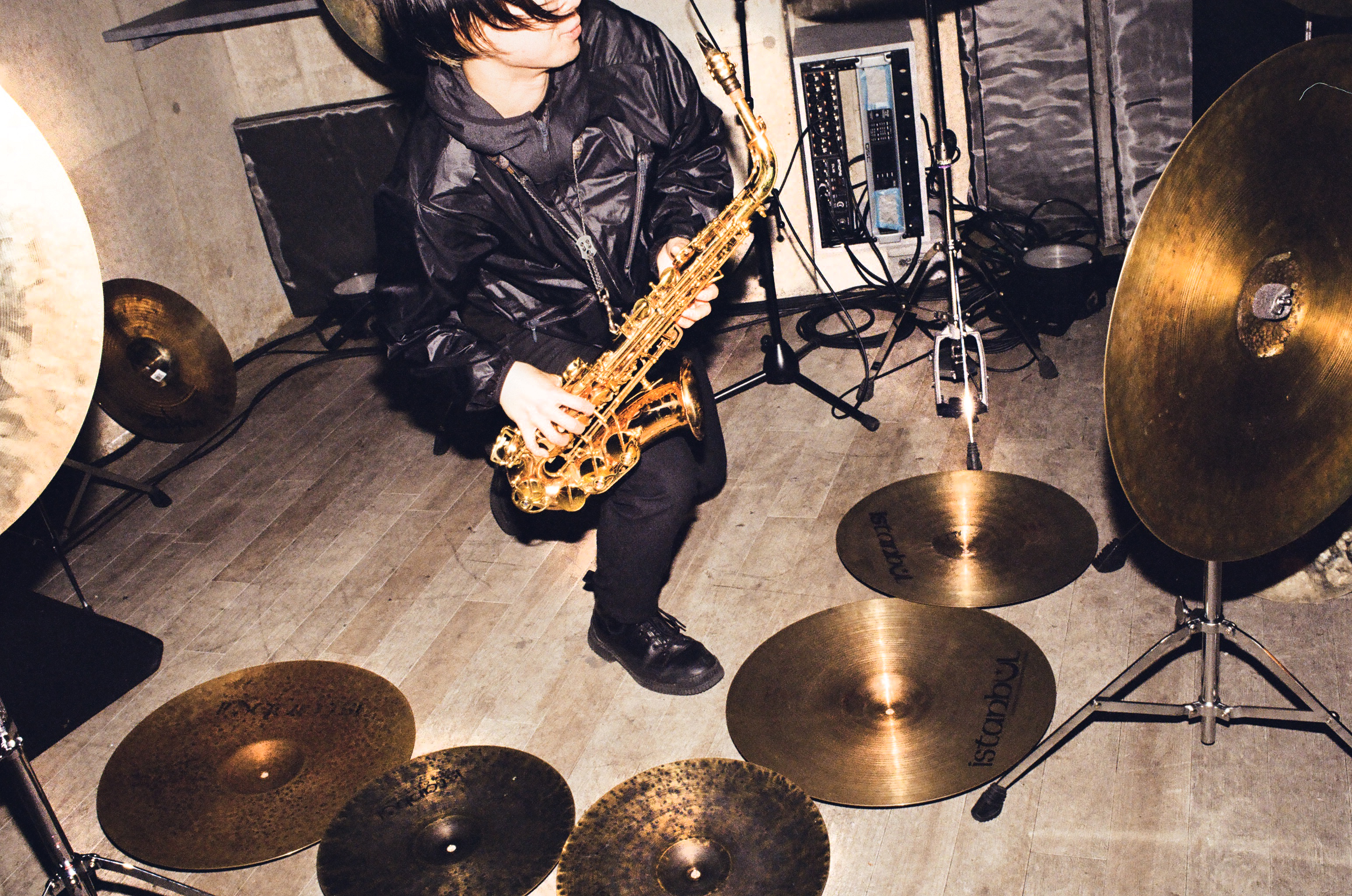
The originals reveal a different side of Okada—less the careful student, more the restless arranger.
"Galaxy" is the album's densest three and a half minutes: no saxophone at all, just Ishiwaka's drums, Masumura's percussion, and Okada alone with clavinet, electric bass, Korg MS-10, and assorted electronics5. The rhythmic center keeps shifting in ways that suggest Sun Ra's late-period electric organ experiments or early Flying Lotus beat constructions, but the underlying pulse has a Japanese quality—the downbeat lands where you don't expect it to. There's no chorus, no release valve; the track simply accumulates tension and then stops.
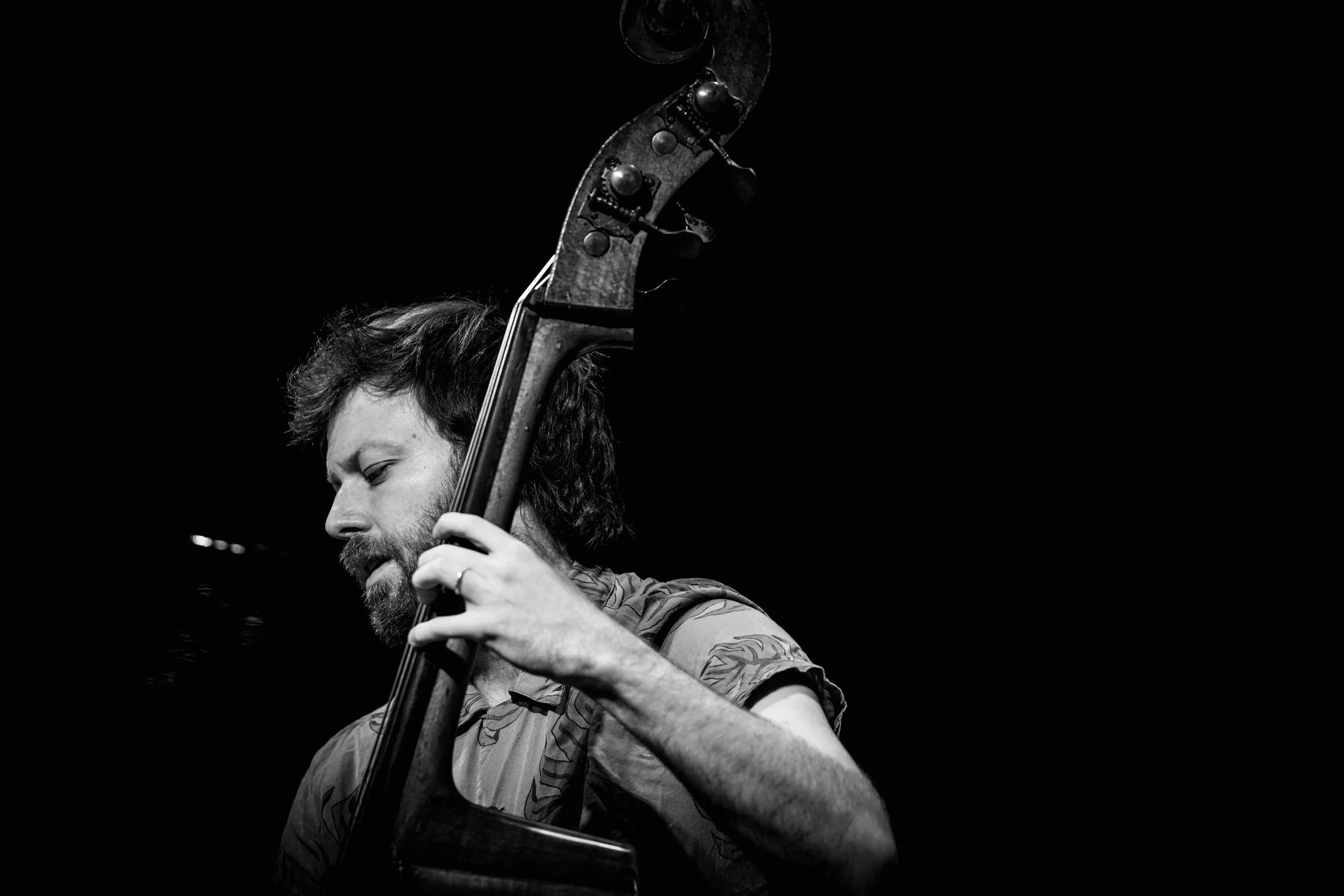
"November Owens Valley," co-written with Matsumaru, pairs alto saxophone with double bass (Marty Holoubek, the Australian bassist based in Tokyo) in passages spacious enough that you can hear the room around the players5. It's the most conventionally "jazz" track on the record, and probably the one where Okada's debt to ECM's recording aesthetic—space as a compositional element—is most audible.
About the album title: label copy states that "Konoma" derives from a phrase in Okakura Tenshin (岡倉天心)'s The Book of Tea (1906)1, meaning "between the trees." Having gone through Okakura's text, I couldn't locate the word 木の間 (konoma) in it. What Okakura does discuss, in his chapter on the tea-room, is the tokonoma (床の間, the alcove) and a Taoist conception of emptiness—the reality of a room lies in the vacant space enclosed by walls, not in the walls themselves. My private guess is that Okada drew on the spirit of Okakura's aesthetics rather than quoting him literally: in Japanese tradition, ma (間)—the interval between things—carries as much weight as the things themselves.
The production was handled across three Tokyo studios (Place Kaki, Studio Dede, OKD Sound Studio), engineered by Toshihiko Kasai and OKD, with additional recording by Masumura. OKD mixed, Kasai co-mixed, and Dave Cooley mastered in Los Angeles5. Okada's own instrument list—electric guitar, electric bass, pedal steel, Wurlitzer, clavinet, Korg MS-10, electronics, percussion—suggests less a frontman than a weaver working from behind the loom.

Okada was born in 1991. He founded 森は生きている (Mori wa Ikiteiru) in 2012, disbanded it in 2015, released a solo debut (Nostalgia) in 2017, then made 別の時間 with Sam Gendel in 2022—an improvisation-focused album on which Haruomi Hosono (細野晴臣) played4, not as a patron saint bestowing approval but as a participant. Nels Cline of Wilco, Carlos Niño from L.A.'s experimental scene, and British guitarist James Blackshaw have all recorded with him23. The common thread isn't virtuosity (Japan has no shortage of technically gifted guitarists); it's that Okada brings a conceptual seriousness to the sessions that the older musicians evidently find worth engaging with. His arranging still has occasional rough edges, but the underlying sensibility is already formed. That's likely what gives him the confidence to cover Garbarek and Suzuki—not a belief that he can outplay them, but a conviction that he has something of his own to say through their material.
Konoma is released on Temporal Drift / ISC Hi-Fi Selects1. In March 2026, Okada performed it as a sextet at Cotton Club Tokyo.

https://hitujiotoko22.bandcamp.com/album/konoma
Listen: "Nefertite" (Jan Garbarek cover)
https://www.youtube.com/watch?v=haK0V2HuNwU
Listen: "Portrait of Yanagi"
https://www.youtube.com/watch?v=M_aZMIgORqc
Sources
1 Temporal Drift label page
2 In Sheep's Clothing HiFi interview
3 TURN Tokyo interview
4 NiEW interview
5 Discogs / Bandcamp credits
6 ele-king interview
7 Mori Art Museum — Theaster Gates: Afro-Mingei
Section: Deep Cuts
Tags: [Deep Review] [Jazz] [Experimental]
Jazz | Temporal Drift / ISC Hi-Fi Selects | LP / Digital
爵士樂在日本是一門手藝。東京的爵士酒吧比紐約還密,唱片行裡七十年代的和聲教材至今有人翻。在這樣的土壤裡,一個1991年出生的吉他手要做什麼才算有意思?岡田拓郎(Takuro Okada)的答案是《Konoma》——八首曲目,三十九分鐘,兩首翻唱加六首原創,框架叫「Afro Mingei」1。
這個框架需要解釋。
民藝是什麼,Afro Mingei 又是什麼
民藝(Mingei),全稱「民眾的工藝」,1926年由柳宗悅和陶藝家濱田莊司、河井寛次郎共同提出。核心主張:無名工匠造的日用器物——陶碗、染布、木器——裡面藏著一種被高級藝術體系忽略的美。不是美術館的美,是廚房和市集的美。
2024年,芝加哥藝術家 Theaster Gates 在東京森美術館做了一個展覽叫「Afro-Mingei」(2024年4月至9月)7。Gates 的論點:非裔美國人的手工藝傳統——從陶器到拼布被到即興音樂——和柳宗悅的民藝運動有同一個內核。都是被壓制的群體通過日常造物主張自己的美學尊嚴。「Black is Beautiful」對抗種族歧視,民藝對抗工業化對手工之美的抹殺——Gates 看到的是同一種抵抗精神。展覽分為「神聖空間」「黑人圖書館」「黑性」「Afro Mingei」四個板塊,涵蓋陶瓷、雕塑、聲音裝置、香道和茶道儀式。
岡田拓郎在訪談中多次提到這個展覽對他的影響236。他從中找到了自己這張專輯的思路:黑人音樂——從 blues 到 free jazz——某種程度上也是一種「民眾的工藝」,不是學院派的、不是體制內的,但有自己完整的美學系統。《Konoma》不是「我要融合兩種音樂」,而是「兩種文化裡各有一套被邊緣化的美學傳統,它們之間能不能對話」。
專輯名「Konoma」
Konoma,日語「木の間」(このま),字面意思是樹木之間的空隙。廠牌文案說這個詞來自岡倉天心(Okakura Tenshin)的《茶の本》(The Book of Tea,1906)1。我翻了一遍那本書——岡倉用英文寫給西方讀者的日本美學論——沒找到「木の間」這個原詞。岡倉談的是茶室裡的「床の間」(tokonoma,壁龕)和老子式的「虛」:空間的本質在於它圍出來的空,不在於牆壁本身。但我私底下揣度,岡田拓郎取的大概是岡倉那套美學的精神而非字面引用:日本傳統裡,間(ま)——事物之間的距離——和事物本身同等重要。他選了「木の間」,要的是那個縫隙——兩種音樂傳統之間的、聲音與沉默之間的。
兩首翻唱:法度之內的新意
「Nefertite」 原曲是挪威色士風手 Jan Garbarek 1969年首張專輯 Esoteric Circle 裡的作品5。Garbarek 後來成了 ECM 廠牌的標誌性人物,代表一種北歐式冷峻、剋制的即興美學。岡田拓郎翻這首,不是翻一首好聽的曲子,是在回應一個歐洲音樂人對非歐洲即興傳統的理解方式。他的版本裡,松丸契(Kei Matsumaru)吹中音色士風,池田抄英(Shoei Ikeda)彈 Rhodes,香田悠真(Yuma Koda)按 Korg MS-10 合成器5。編制比原版更稀薄,留白更多。不是溫暖化處理,是把 Garbarek 原有的肅靜推得更遠。
https://www.youtube.com/watch?v=haK0V2HuNwU
「Love」 出自鈴木宏昌(Hiromasa Suzuki)1976年的專輯 Colgen World5。鈴木綽號「Colgen」,是日本 fusion 時代的鍵盤手和編曲人,原版是鋼琴三重奏——日野元彥的鼓、稻葉國光的低音提琴,緊湊有力。岡田拓郎的版本完全換了配器:松丸契改吹長笛,香田悠真彈 Wurlitzer 電鋼琴,増村和彥(Kazuhiko Masumura)加敲擊樂,岡田拓郎自己彈電結他和電低音結他。鍵盤主導變成了木管主導。原曲的溫度還在,但聲音的質地全換了。旋律和和聲結構沒有被顛覆,但每一個音色的選擇都是重新思考過的。
原創部分:調度的想像力
「Galaxy」 是整張專輯裡最密的一首。沒有色士風,只有石若駿(Shun Ishiwaka)的鼓、増村和彥的敲擊樂,加上岡田拓郎自己操控的 clavinet、電低音結他、Korg MS-10 合成器和電子元件5。節奏帶著 Sun Ra 晚期電子實驗的迷幻感,碎拍的處理方式讓人想到早期 Flying Lotus,但律動的底色是日本式的——拍點的重心不在你預期的位置。三分半鐘,不設副歌,全是張力的堆積和釋放。
「Portrait of Yanagi」 ——「Yanagi」(柳)指的是柳宗悅,民藝運動的創始人。這首是給他的肖像畫。岡田拓郎在這裡彈 pedal steel 結他——一種橫置的鋼弦樂器,用鋼棒按弦,腳踏板改變音高,常見於鄉村音樂和夏威夷音樂,爵士裡非常少見5。池田抄英吹次中音色士風,香田悠真彈 Wurlitzer,石若駿的鼓和増村和彥的敲擊樂都壓得很低。整首曲子像一首你聽過但記不清出處的老標準曲,旋律的輪廓在節拍和動機之間若隱若現——用聲音喚起一種模糊的記憶。
https://www.youtube.com/watch?v=M_aZMIgORqc
錄音與製作
三個錄音室:Place Kaki、STUDIO Dede、OKD Sound Studio,都在東京。錄音師是 Toshihiko Kasai 和 OKD,増村和彥負責部分補錄。混音由 OKD 主導,Kasai 協助。母帶處理交給洛杉磯的 Dave Cooley5。
岡田拓郎的樂器清單:電結他、電低音結他、pedal steel 結他、Wurlitzer 電鋼琴、clavinet、Korg MS-10 合成器、電子元件、敲擊樂。他不是站在樂隊前面的獨奏者,更像一個在後面編織聲音紋理的人。
他從哪裡來
1991年生。2012年組建森は生きている,2015年樂隊解散。2017年首張個人專輯《Nostalgia》。2022年出了《別の時間》,和 Sam Gendel 合作的即興導向專輯——細野晴臣(Haruomi Hosono)在裡面參與了演奏4——開始探索極簡框架下的張力。《Konoma》是這條線往下走的結果,但野心更大:不只是即興,而是有理論框架的創作。
Wilco 的結他手 Nels Cline、洛杉磯即興/氛圍圈的 Carlos Niño、英國結他手 James Blackshaw 都跟他進過錄音室23。這些前輩和大師願意和一個三十出頭的年輕人合作,我覺得不是因為技術——技術好的日本結他手太多了——而是因為他對作品的理解有特別之處。他完全沒有包袱,調度上偶爾還有點青澀,但風骨已經在了。這也是他敢翻 Jan Garbarek 和鈴木宏昌的底氣:不是覺得自己比前輩強,是覺得自己有話要說。
Temporal Drift / ISC Hi-Fi Selects 出版1。2026年3月在 Cotton Club Tokyo 以六重奏編製做了《Konoma》專場。
https://hitujiotoko22.bandcamp.com/album/konoma
參考來源
1 Temporal Drift 廠牌頁面
2 In Sheep's Clothing HiFi 訪談
3 TURN Tokyo 岡田拓郎訪談
4 NiEW 採訪
5 Discogs / Bandcamp 製作名單
6 ele-king 訪談
7 森美術館 — Theaster Gates: Afro-Mingei
Section: 深度樂評
Tags: [Deep Review] [Jazz] [Experimental] [繁體中文]
Comments 留言